What is acupuncture?
Acupuncture is a practice that originated in China more than two thousand years ago. It involves gently placing very thin, sterile needles at specific points on the body. Traditionally, these points were described as places to influence the flow of qi (energy) along pathways called meridians.
Today, acupuncture is practiced by licensed clinicians and studied in modern research settings. At Helms Acu Co., treatment is guided by both traditional point selection and a detailed understanding of anatomy.
About the needles
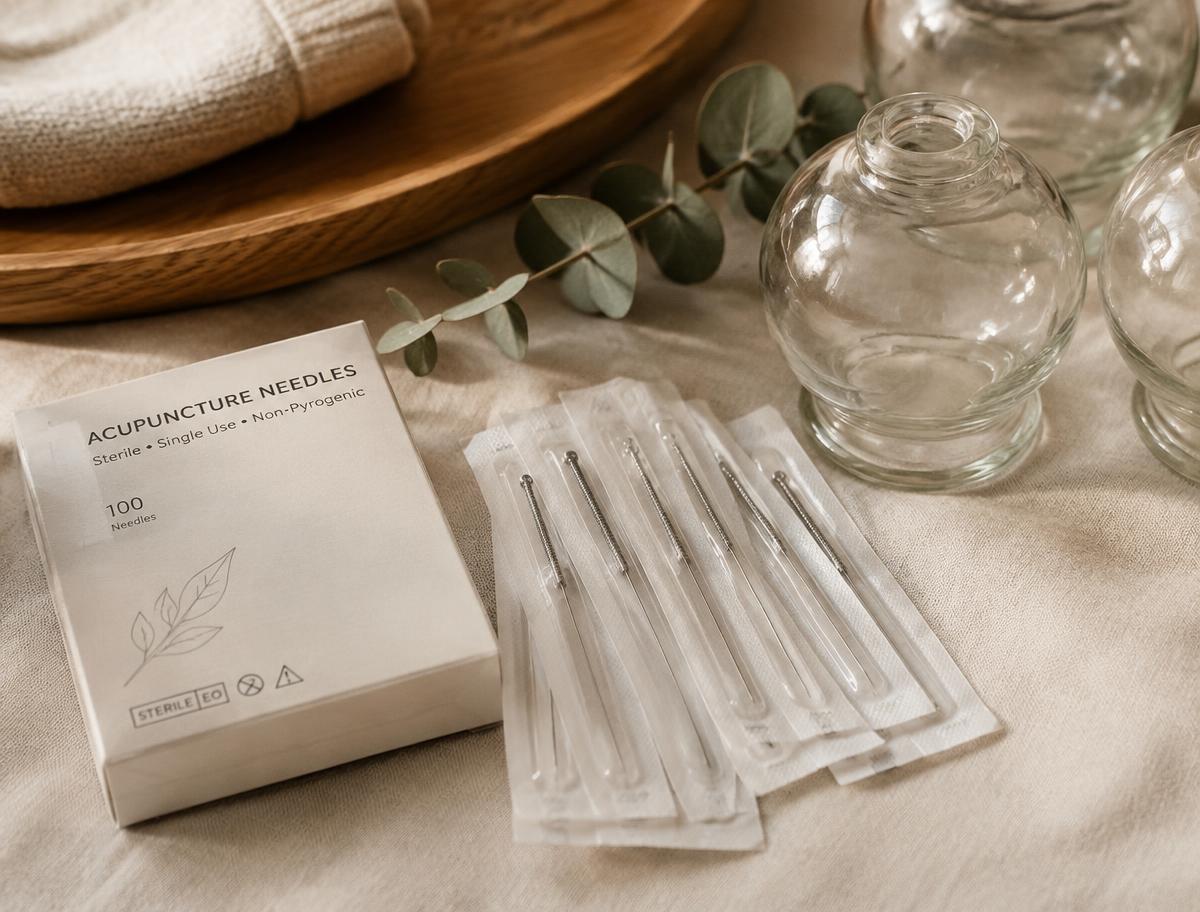
Acupuncture needles are solid (not hollow like injection needles) and extremely fine — many are only slightly thicker than a hair. Every needle used here is sterile, single-use, and disposed of in a sharps container immediately after use. Needles are never reused.
A modern way to think about it
Researchers are still learning exactly how acupuncture works. Current theories suggest it may stimulate nerves, muscles, and connective tissue, and may influence how the brain and nervous system process pain. Some studies also show that expectation and the calm, caring treatment setting play a meaningful role.
We think that's worth being upfront about — a good experience and real physiology can both matter.
What the research says (and doesn't)
According to the U.S. National Center for Complementary and Integrative Health (NCCIH), acupuncture may help ease some types of chronic pain — such as low back, neck, and knee osteoarthritis pain — and may help reduce the frequency of tension headaches and prevent migraine headaches.
For many other concerns, the evidence is limited, mixed, or still emerging. Results vary from person to person, and acupuncture works best as one part of a broader plan with your healthcare team. You can read more on our What Acupuncture Can Help With page, including links to sources.
What does it feel like?
Most people feel a quick tap as the needle goes in — often less than they expected. Afterward you may notice a dull ache, warmth, heaviness, or a gentle tingling around the point. These are normal. Sharp or uncomfortable sensations should be mentioned right away so the needle can be adjusted or removed.
Once the needles are in, many people feel calm, sleepy, or pleasantly heavy. Dozing off is common!
Safety precautions
When performed by a qualified, licensed practitioner using sterile needles, acupuncture has a low rate of serious side effects. Minor effects like soreness, small bruises, or brief lightheadedness can happen.
Please let Dr. Helms know before treatment if you:
- are pregnant or might be pregnant
- take blood thinners or have a bleeding disorder
- have a pacemaker or other implanted electrical device
- have a skin condition, infection, or recent surgery in an area to be treated
- tend to faint around needles, or feel anxious about them
Acupuncture should not replace diagnosis or care from your physician. New, severe, or unexplained symptoms deserve a medical evaluation.
Realistic timelines
Some people feel a difference after one session; for others, changes are gradual. As a rough guide, acute issues like muscle pain or tension headaches often respond within 1 to 3 sessions. Chronic conditions — think persistent back pain, migraines, or anxiety — typically require 6 to 10 sessions before meaningful, lasting change takes hold.
A large meta-analysis of more than 20,000 patients found consistent pain relief in those who completed 6 to 15 sessions across the year (Vickers et al., The Journal of Pain, 2018). Dr. Helms will suggest a plan, check in on your progress, and be honest if something isn't working.
Your first session, step by step
- Before: eat a light snack, wear comfy, loose clothing, and bring a list of medications and questions.
- Conversation: we'll review your history, goals, and comfort level.
- Assessment & consent: a hands-on evaluation, a clear explanation of the plan, and your okay before anything begins.
- Treatment: needles are placed and you rest comfortably, warm and draped.
- After: needles are removed and disposed of, and you'll get simple aftercare tips.
The full guide lives on our First Visit page.